A supply line let go, the washer overflowed, or the storm found a way into the basement. What happens now decides whether your carpet gets dried or gets torn out — and some of these jobs aren't ours at all. Below: a triage tool, the first-hour list, and a straight answer about what survives. If water is still coming in, stop reading and call (859) 621-RUGS.
Five questions. Some answers say call us. Some say call somebody else. One says don't call anybody yet — deal with the power.
No email, no form, no price. An honest read on what you've got and who should handle it.
General guidance from 25 years of water jobs — not a substitute for someone looking at your floor, and not a safety inspection.
Wet carpet isn't one problem. It's a problem that changes shape depending on how long it sits.
Shut off the source — the fixture valve if you can find it, the main if you can't. Get people and pets out of the water. Photograph the room before anything moves: wide shots, then close-ups. Everything after this is easier if the water stopped here.
The water is still mostly in the carpet and the pad, and hasn't gone far into the walls or the subfloor. This is the small version of this problem. Extraction now is the difference between a drying job and a tear-out.
For clean water, still a good spot to be in. The pad is the open question: it holds water long after the surface feels dry, and while it's still on the floor it can only dry from one side. Anyone who tells you a fan alone handles this hasn't lifted a corner.
Somewhere in here the trade stops treating standing clean water as clean. Two things to check: press the drywall just above the baseboard — soft or damp means the water climbed — and go into the room after it's been shut up an hour and smell it. Musty means the job grew.
The question stops being "can this be cleaned" and starts being "what has to come out." The carpet itself can sometimes still be saved with the pad replaced and everything dried properly. Sometimes. Nobody honest promises that over the phone.
Kentucky adds its own wrinkle: on a humid August afternoon, throwing the windows open pulls damp air into a room you're trying to dry. Run the air conditioning instead — it takes water out of the air while it cools.
The honest version, before anybody quotes you anything.
Both columns get said out loud, standing in the room, before anyone agrees to anything. Selling a cleaning that was never going to fix the problem is how you get one job and no second call.
Most water jobs need one or two of these. Knowing which is half the battle.
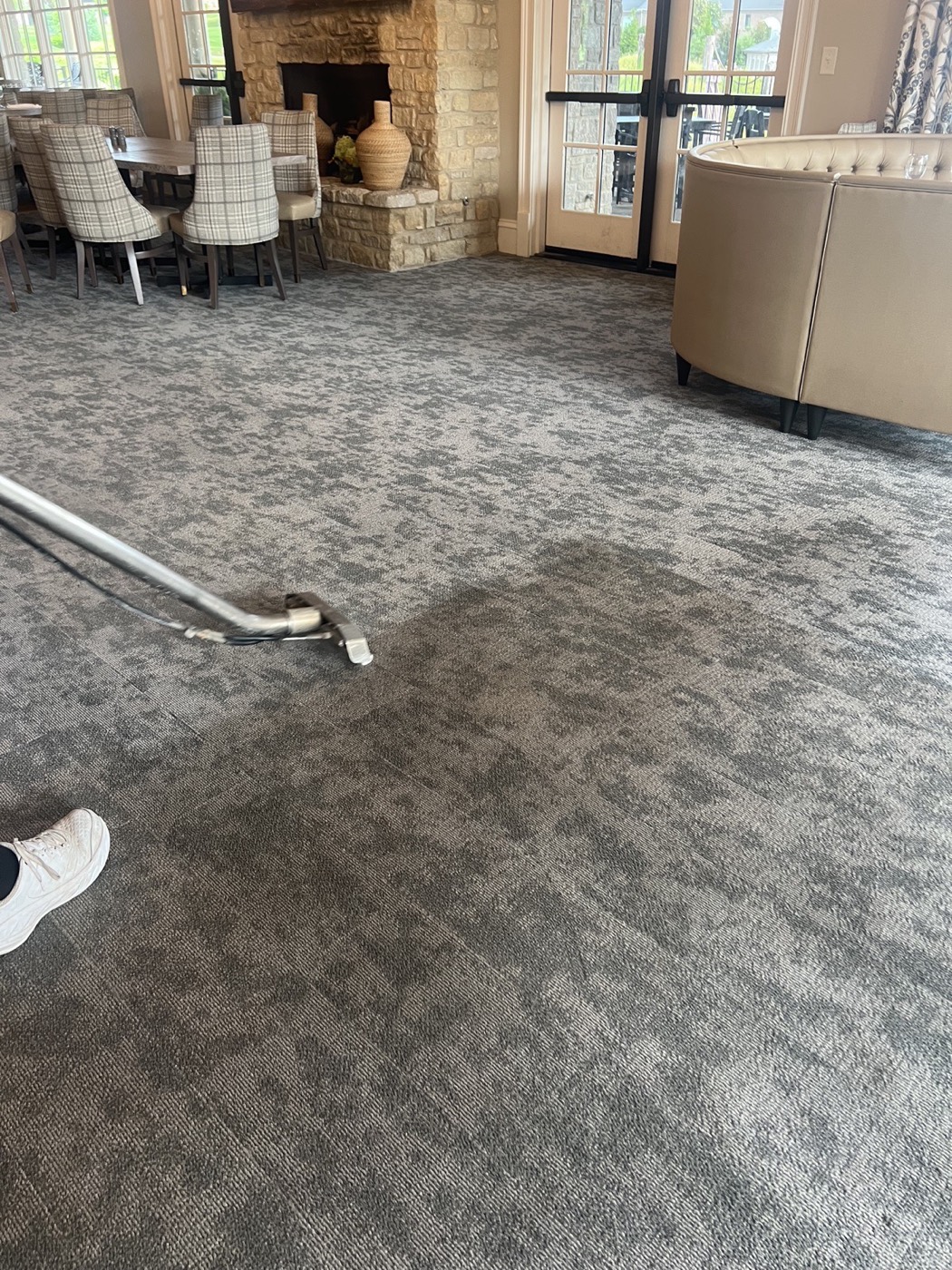
Clean or grey water, still inside the window, and you want it out of the carpet and pad today. Truck-mounted extraction pulls standing water out fast, and we rent the dehumidifiers and air movers that finish the drying. (859) 621-7847
Sewage, storm water, ground water, wet framing or drywall, or it's been sitting for days. That trade carries the containment, the disposal, and the certifications for contaminated water. We don't, and we'll say so.
Before anything gets hauled to the curb. Photograph everything first — wide, then close — and ask them what they need documented. Throwing out the evidence is the common expensive mistake.
We'd rather point you at the right trade than take a job we shouldn't have. And when a contractor finishes the demolition and rebuild, the cleaning that comes after is exactly the kind of work we do — call us then.
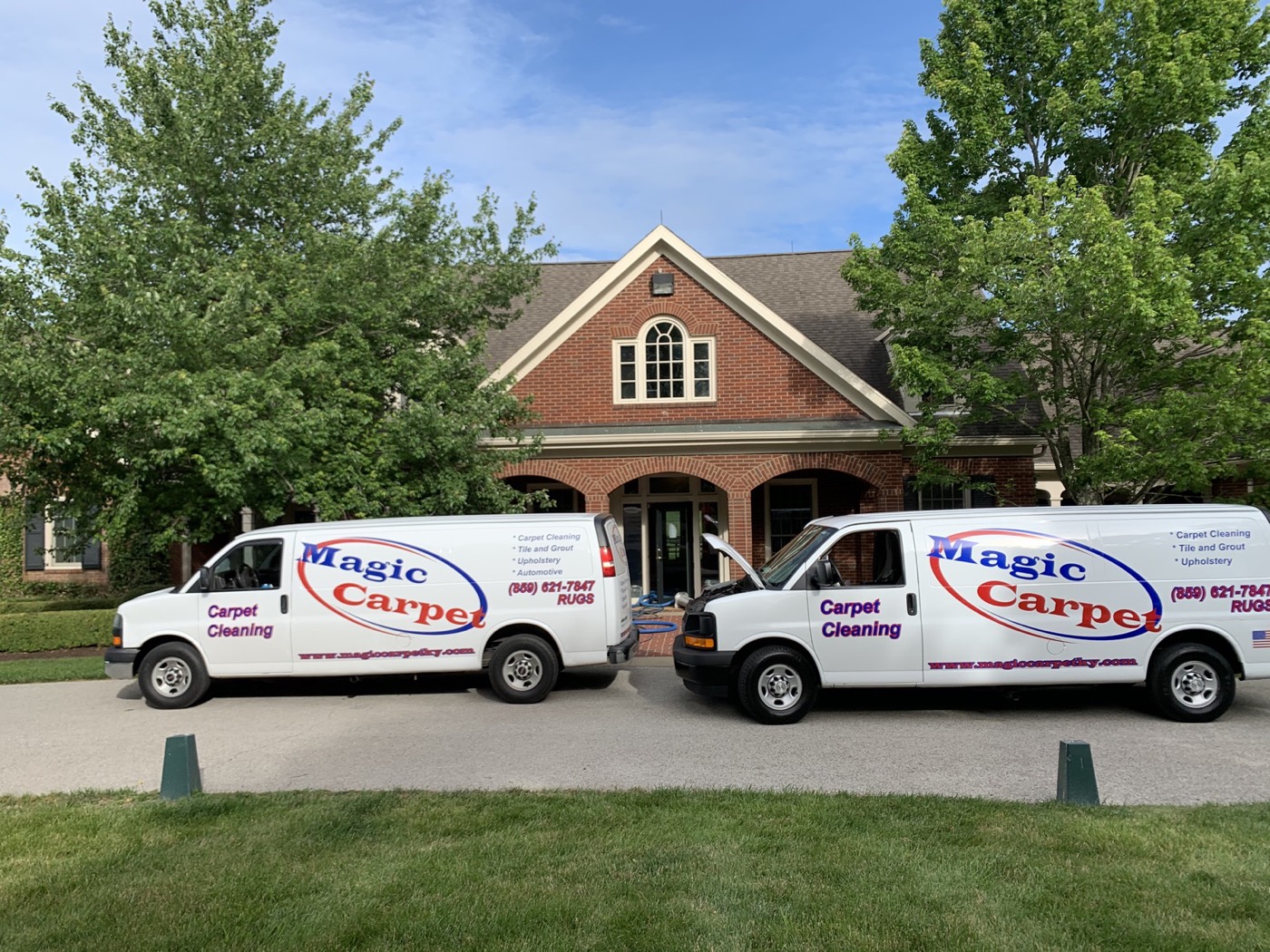
Two vans, two Hayeses, a truck-mounted rig, and the blowers that come in behind it.


If you'd rather run the drying yourself, that's a real option — see dehumidifier and air mover rentals. If you'd rather we handled all of it, that's a phone call.
The restoration trade works to a rough 24-to-48-hour window. Inside it, clean water pulled out of carpet and pad quickly usually means a drying job. Past it, water that started clean isn't treated as clean any more, the pad has been holding moisture the whole time, and the question shifts from cleaning to what has to come out. Damp drywall at the baseboard and a musty smell are the two signs the job has grown.
Often — if three things line up: the water came from a clean source, it came back out fast, and the carpet hasn't delaminated (the backing separating, leaving ripples that won't lie flat). Carpet soaked by a sewer backup, storm water, or ground water is a different story: the standard is that porous materials which soaked up contaminated water get removed, not cleaned. Nobody can give you a verdict over the phone. It takes lifting a corner and feeling the pad.
Frequently, yes. Pad soaks like a sponge, holds water long after the face fiber feels dry, and while it's stapled to the floor it can only dry from one side. Clean water caught in the first hours can sometimes be extracted right through carpet and pad together. Water that sat, or water that wasn't clean to start with, usually ends with the pad coming out even when the carpet stays.
Airflow is the right instinct — but only after the water is out. Blowing air across carpet that's still holding water mostly moves that water into the air, the walls, and the next room. Extract first, then dry. For a damp patch you caught early, towels and a box fan are genuinely enough. For a soaked room, the water needs a machine.
Then it isn't a carpet-cleaning job, and we'll tell you that instead of quoting it. Sewer backups, storm water, and ground water are graded as contaminated, and the standard calls for removing the carpet, the pad, and the other porous things that soaked it up. That's a water-damage restoration contractor's work — containment, disposal, certification. We'd rather send you to the right trade.
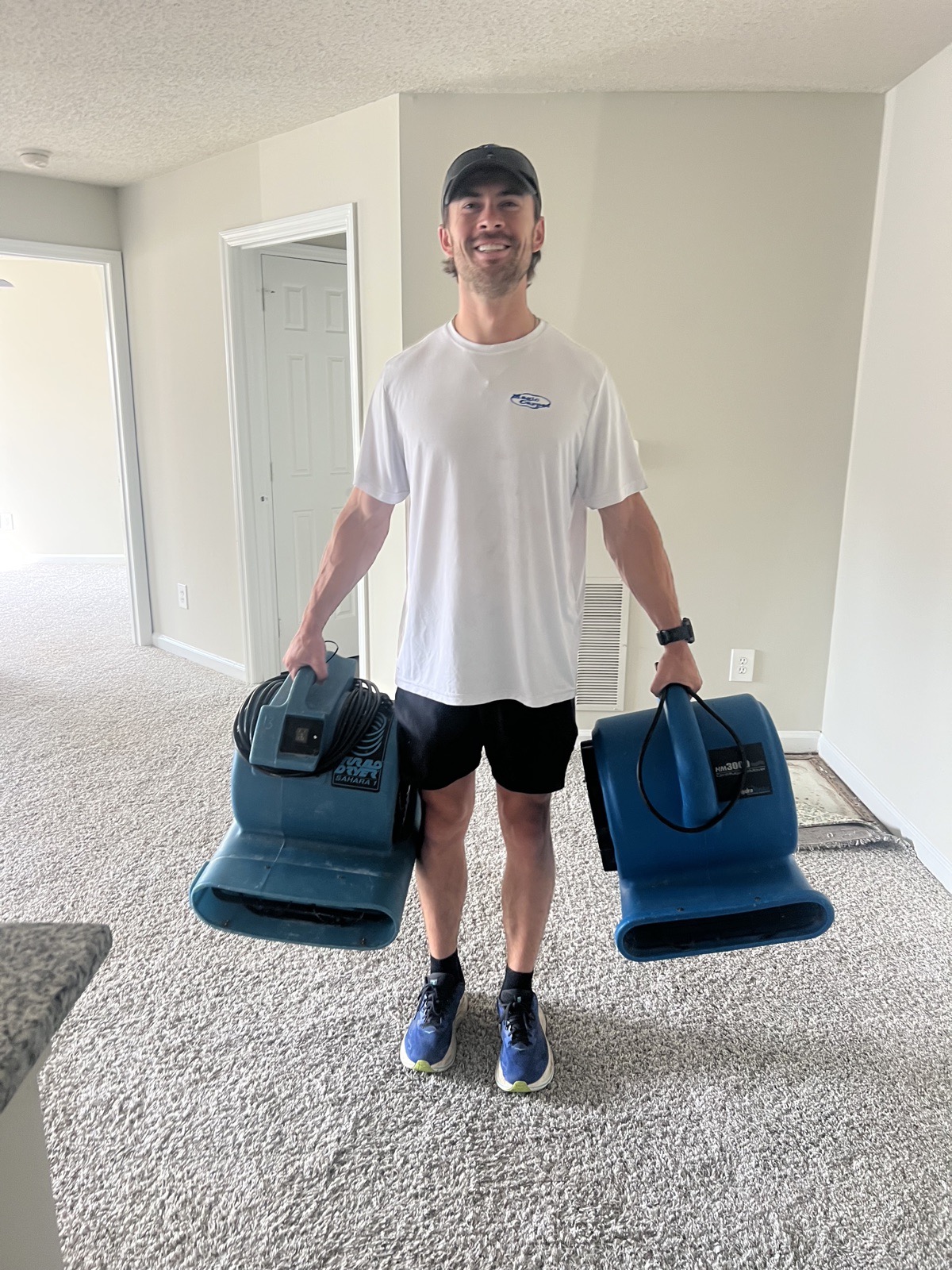
Yes — industrial dehumidifiers and high-velocity air movers. Call (859) 621-7847 for availability and rates. For a small damp area you caught early, our honest answer is usually that you don't need us at all: a box fan and the air conditioning will do it.
A musty smell after a wet-carpet event almost always means something underneath is still damp — usually the pad, sometimes the subfloor. Masking it doesn't help; finding what's still wet does. If a room that was dried still smells on a humid afternoon, that's worth a call rather than another bottle of deodorizer.
A normal cleaning dries in 6–12 hours, and 2–6 to the touch with good airflow. A water-damage job isn't a normal cleaning: it depends on how much water went down, how long it sat, and what's underneath. That's what the air movers and dehumidifiers are for, and it's a conversation we'd rather have with the actual floor in front of us than over the phone.
Call and tell us what happened — where it came from, how long it's been, how many rooms. We'll tell you honestly whether it's our job or somebody else's. Estimates are free and a real person answers.
Call (859) 621-7847