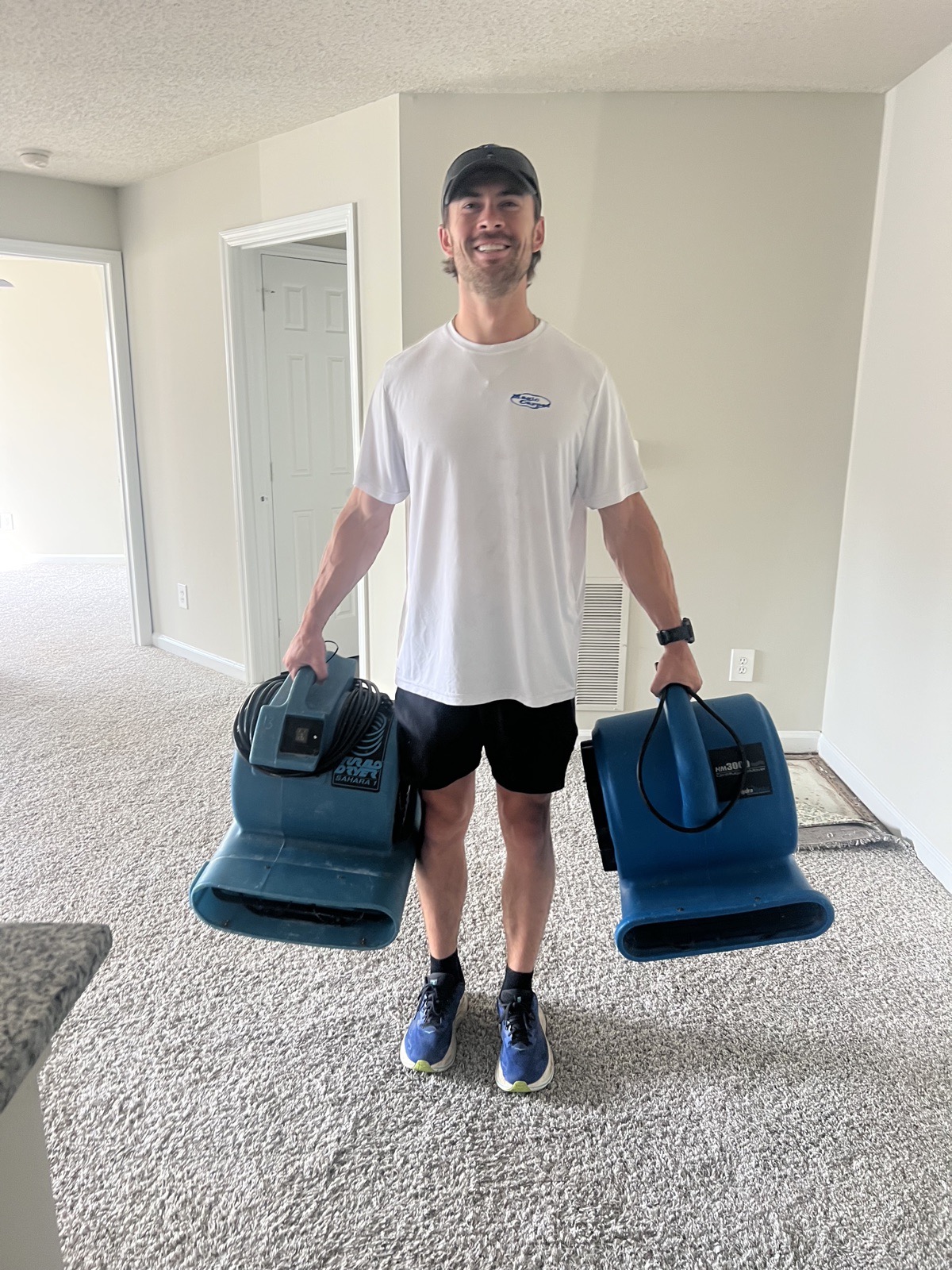
Short answer: 6–12 hours, and dry to the touch in 2–6 with good airflow. The long answer depends on your pile, your house, and what the weather is doing outside — which in Kentucky is the part nobody tells you. Answer six questions below and we'll give you a real window.
This is what we tell every customer before we pull the hose back to the van.
In clean socks, the minute we're done. Not shoes — they track new soil into damp fibers — and not bare feet.
With ceiling fans on and the HVAC running. The surface stops feeling cool and damp well before the pile is dry underneath.
Furniture back, rugs back down, life back to normal — usually the same day we clean.
Six questions. Hours, not guesses — and if your answers describe something that isn't a normal dry-out, it'll say so instead of printing a number.
Built on the same ranges we quote at the door — adjusted for pile, airflow, and a Kentucky afternoon.
An honest estimate, not a promise. Carpets don't read charts — if yours is behaving differently, call us.
The single biggest thing you control on cleaning day.
Carpet dries by handing its moisture to the air around it. On a muggy Central Kentucky afternoon that air is already carrying about as much as it can hold, so opening the windows brings the humidity in and drying stalls. Your air conditioner is also a dehumidifier — closed house, A/C on, fans moving air across the floor is the fastest setup we know of in July.
Cold outside air holds very little moisture, and your furnace warms it up without adding any — which is why houses feel dry in January and why carpet often dries faster then than it does in June. Run the heat, keep the fans going, and a winter job is usually done well inside the same day.
Moving air across the surface does more than cranking the thermostat. Ceiling fans on, doors between rooms open, and the HVAC fan set to ON instead of AUTO so it circulates even when it isn't heating or cooling.
Below grade, cooler surfaces and slower air mean a basement room can take half again as long as an upstairs bedroom with the same carpet. If yours has a dehumidifier, cleaning day is the day to run it.
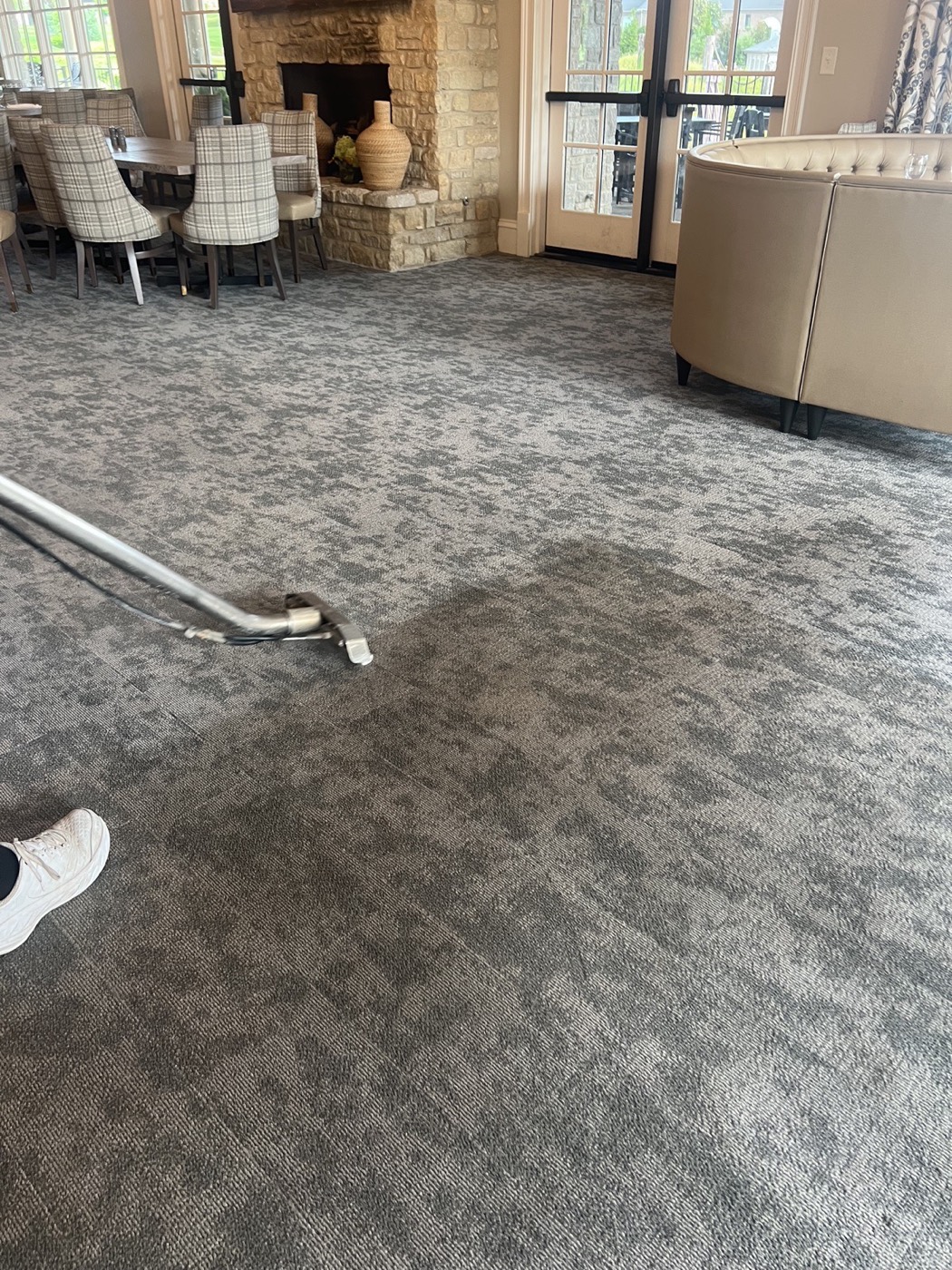
The mistake that costs people a carpet isn't walking on it too soon — it's setting a wet-footed dresser back down on it.
Fold one, press it into the pile with your thumb for a few seconds, and look. Damp towel means the base of the pile is still holding water, no matter how dry the surface feels.
Foil squares or plastic blocks stay under wood and metal legs until the carpet is dry through. Wood finish and metal rust both wick into damp fibers, and those marks don't come out.
Beds, entertainment centers, china cabinets — put them back once everything else is dry. Their weight crushes damp pile flat and traps whatever moisture is left underneath.
An area rug laid over carpet that's still finishing up seals moisture in on both sides. Give it an extra few hours beyond the paper-towel test.
Damp socks on tile or hardwood are slick. Keep an eye on kids and anyone unsteady for the first few hours, and put a towel down at the doorways.
Plan on 6–12 hours to dry completely. With good airflow — ceiling fans on, HVAC running — many rooms are dry to the touch in 2–6. You can walk on the carpet in clean socks right away. Thick pile, a closed-off room, a basement, or a muggy Kentucky afternoon all stretch that window.
Yes — in clean socks, right away. Skip shoes, which track new soil into damp fibers, and skip bare feet, which leave oils behind. Walk as little as you can until it's dry to the touch, and watch the step from damp carpet onto hard floors; it's slick.
Once the carpet is dry all the way through, not just on the surface — use the paper-towel test above. Leave foil squares or blocks under wood and metal legs until then, so finish and rust can't wick into damp carpet.
In a Central Kentucky summer, usually not. On a muggy afternoon you'd be letting in air that's already loaded with moisture, and drying stalls out. Close the house up and run the A/C — it's a dehumidifier as much as a cooler. On a cool, dry day, open windows plus fans are excellent.
Not usually. Past about 24 hours, something else is going on: very heavy pile with no air moving, a room that never got opened up, a rental machine that put down more water than it pulled back, or water coming from somewhere other than the cleaning. Call (859) 621-7847 and we'll help you work out which — that's a phone call, not a service call.
It puts more water in than a low-moisture method does — and takes it back out in the same pass under strong vacuum. Water heated to 230°F, a pH-balanced rinse, and extra dry strokes at the end are what keep dry time in hours instead of days while still pulling soil out of the base of the pile. We'd rather clean it properly and give you an honest dry time than skim the top and call it fast.
Call and describe the room — we'll tell you what to expect, whether or not you book anything. Estimates are free and a real person answers.
Call (859) 621-7847